Is Mushroom Coffee Good for You? Benefits and Limits
Mushroom coffee can be a practical lower-caffeine coffee choice, but the real benefits depend on the blend, the evidence, and what fits your routine.
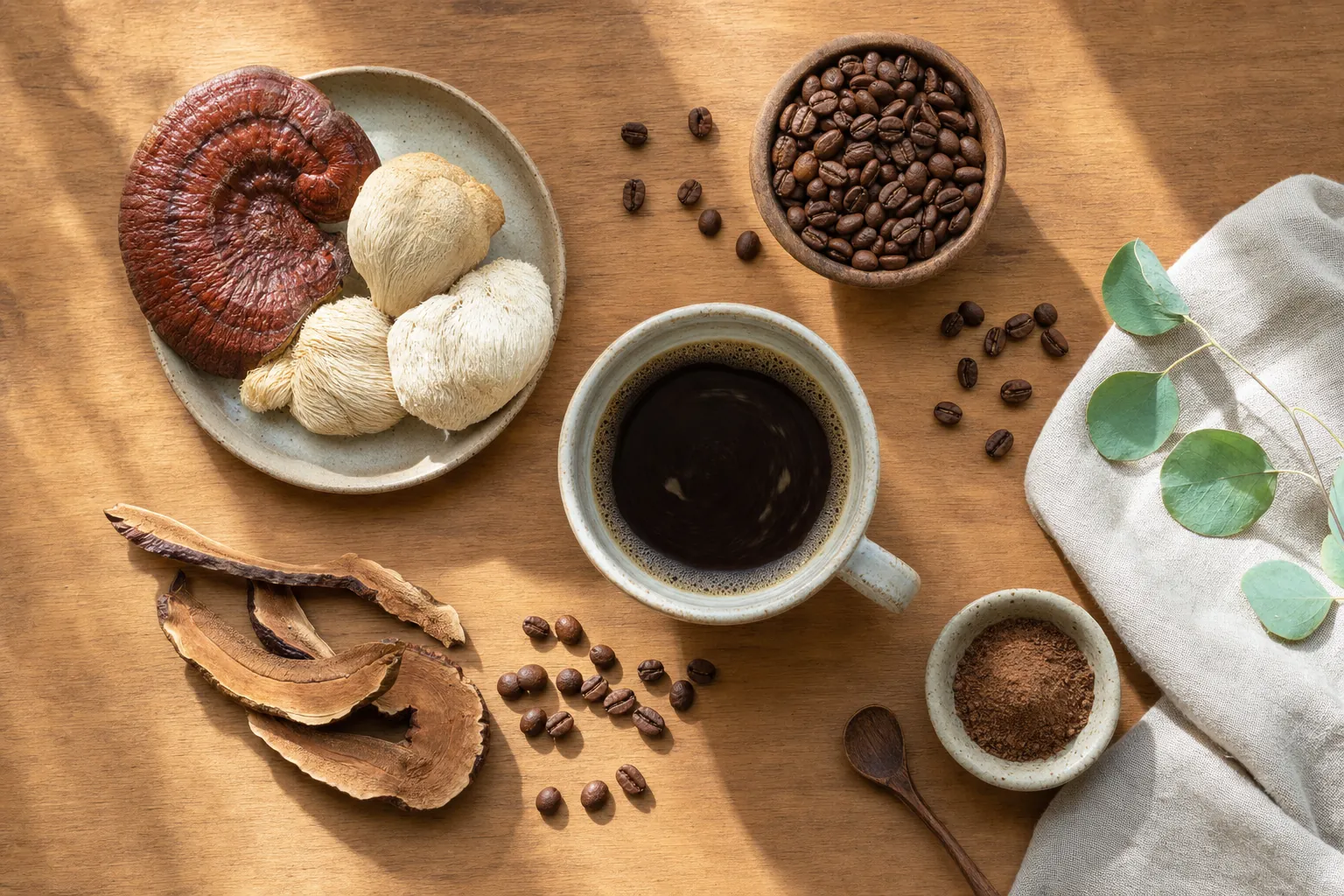
Mushroom coffee can be a good choice for some people, but not because it turns an ordinary cup into a health treatment. At its most practical, it is a coffee-style drink made with regular coffee or a coffee alternative plus mushroom powder or extract. The appeal is simple: keep a familiar morning ritual, potentially use less caffeine, and try a blend with ingredients such as reishi, lion's mane, chaga, or cordyceps.
That can be useful. It can also be easy to overstate. A mushroom coffee may fit better than a second strong cup of regular coffee if you are trying to reduce caffeine. It may not be a good fit if the formula is vague, the caffeine is still too high for you, the added ingredients do not agree with you, or you are hoping it will solve a medical problem. The honest answer is that mushroom coffee is a product category, not a single proven outcome.
This guide explains the difference between reasonable benefits and bigger claims that need more evidence. It also gives you a practical way to compare a mushroom coffee with your usual routine, read a label, and decide whether a particular blend deserves a place in your cupboard. This is general information, not personal medical advice. If you take medication, have a condition, are pregnant or breastfeeding, or are choosing for a child, ask a clinician or pharmacist who knows your situation.
The short answer: it can be a sensible swap, not a miracle drink
Mushroom coffee is most useful when it helps you make a realistic change you already want to make. For example, a coffee-based blend with less coffee may lower the caffeine in one serving. That could be a meaningful benefit for someone who feels jittery after a large regular coffee, wants to avoid caffeine later in the day, or simply prefers a lighter cup.
There is a difference between that practical benefit and the broader marketing around immunity, stress, focus, sleep, inflammation, and weight. Harvard Health notes that mushroom coffee mixes commonly use varieties such as chaga, lion's mane, reishi, cordyceps, and turkey tail, but also points out that well-designed human research is limited and that the research is not on finished mushroom coffee drinks themselves. Its overview of mushroom coffee is a useful reality check: promising ingredients do not automatically prove a benefit from every prepared cup.
So, is mushroom coffee good for you? It can be a pleasant, thoughtful coffee choice. It is not automatically healthier than regular coffee, and it is not a substitute for food, sleep, treatment, or a medically appropriate caffeine plan. The right question is not “Is every mushroom coffee good?” It is “Does this specific blend help me build a routine I understand and enjoy?”
What mushroom coffee actually is
Mushroom coffee does not usually mean chopped culinary mushrooms floating in a mug. Most blends use dried mushrooms, mushroom powders, or concentrated extracts. Those are combined with instant coffee, ground coffee, coffee alternatives, cacao, tea, creamers, spices, or sweeteners. A product can still taste much closer to coffee than to a mushroom dish because the roasted coffee profile does most of the work.
There are two broad versions worth separating. The first is coffee-based mushroom coffee. It contains coffee and usually caffeine, even when the blend has less coffee than a regular serving. The second is coffee-free or coffee-style mushroom drinks. These may use chicory, cacao, tea, herbs, or other roasted ingredients instead. They may have little caffeine, but that is not guaranteed. Tea, cacao, guarana, and yerba mate can all contribute caffeine too.
UCLA Health describes typical mushroom coffee blends as a combination of ground mushrooms and coffee beans, with the mushrooms dried, ground, and processed for their compounds. Its explanation of the category also highlights the point shoppers miss most often: a mushroom coffee can still be coffee. The ingredient list matters more than the front label.
The clearest potential benefit: a lower caffeine routine
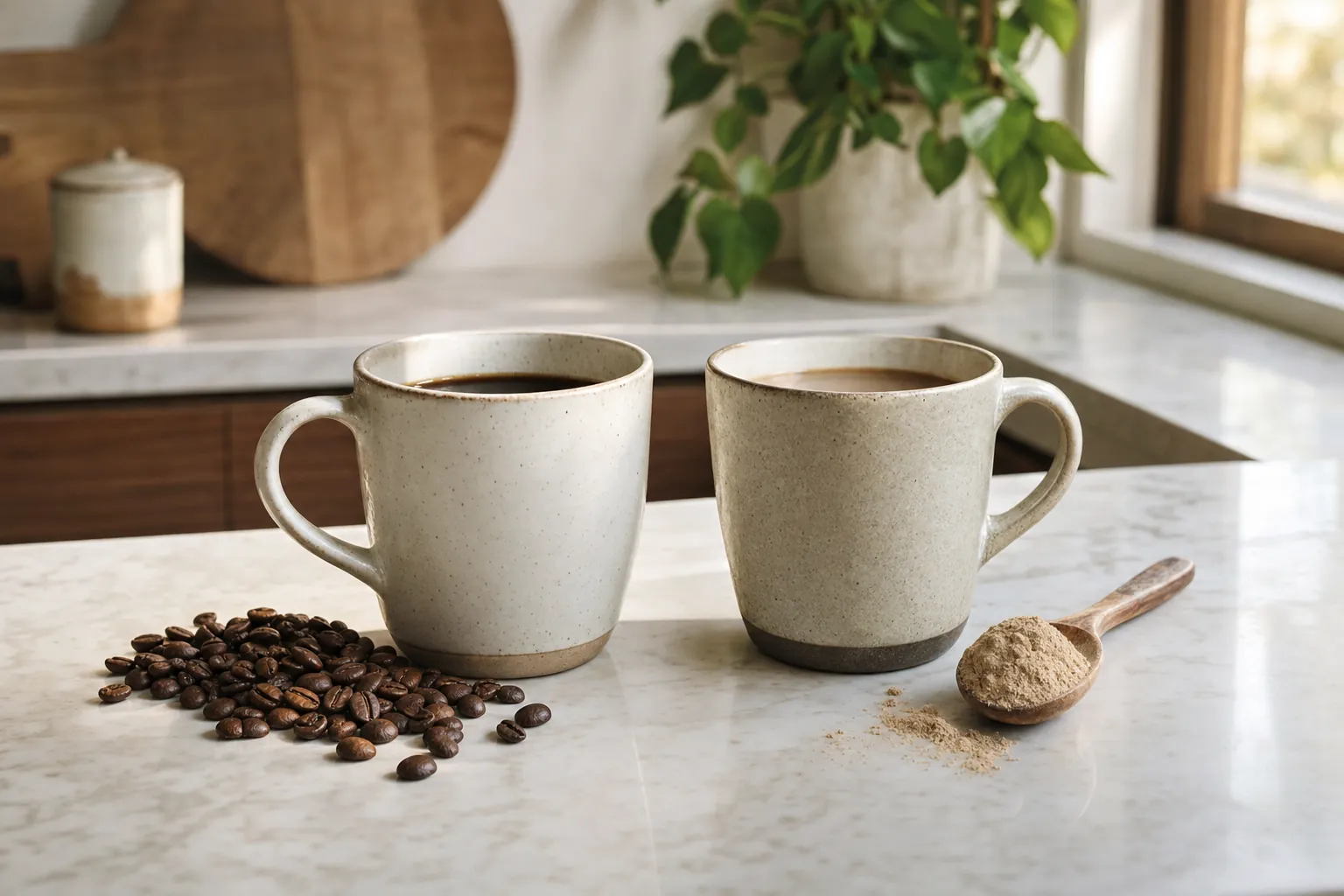
The most dependable reason to choose mushroom coffee is not a dramatic health claim. It is caffeine control. If a formula replaces part of the coffee with mushroom ingredients, it may deliver less caffeine than the regular coffee you would otherwise drink. UCLA Health notes that a blend made with about half coffee can mean about half the caffeine, which may leave some people less jittery and make it easier to protect sleep. That lower-caffeine point is practical because it is about the cup you are actually replacing.
Still, “less caffeine” only helps when it replaces a higher-caffeine habit. If you drink a mushroom coffee and then have your usual large coffee, afternoon energy drink, and caffeinated tea, the daily total may not fall at all. The U.S. Food and Drug Administration says that, for most adults, 400 milligrams of caffeine a day is an amount not generally associated with negative effects, while emphasizing that sensitivity varies based on factors such as health conditions, medications, and individual response. Its caffeine guidance is a better reference point than judging a product by whether the word “mushroom” sounds gentler.
If caffeine is the reason you are shopping, find the serving size and the stated caffeine amount first. If a brand does not list an amount, look at the actual coffee, tea, cacao, or stimulant ingredients and choose a clearer product when possible. The mushroom coffee caffeine guide walks through the label details that can change how a cup feels.
What about focus, stress, immunity, and sleep?
These are the claims that make mushroom coffee interesting, and they are also where shoppers need the most restraint. Mushrooms contain many naturally occurring compounds, and individual mushroom species have a long history of traditional use. Researchers are studying some of those species and compounds. But the leap from early research, a concentrated supplement, or an animal study to “this coffee will improve your focus” is a large one.
The finished drink adds more variables: which mushroom is used, whether it is an extract or whole powder, how much is in a serving, how it was processed, what the coffee base contributes, and how regularly someone drinks it. Harvard Health makes the same distinction clearly. It notes that laboratory and animal findings may be interesting, but there is very little human research on medicinal mushrooms and no guarantee that possible benefits carry through into a processed coffee drink. That limitation is not a reason to reject the category. It is a reason to avoid buying a promise instead of a product.
There is also a simple explanation for why some people feel better after switching: they may be drinking less caffeine, drinking their coffee earlier, using less sugar, or being more deliberate about one daily ritual. Those changes can matter. They just do not prove that a mushroom ingredient independently changed a health outcome.
How to think about the evidence without getting lost in it
It is reasonable to be curious about research on functional mushrooms. The useful question is what, exactly, a study can tell you. A study of one mushroom species is not automatically a study of every mushroom. A study of an extract is not automatically a study of a coffee powder. A study using a measured dose under research conditions is not automatically evidence for a packet with an undisclosed blend.
That does not make research worthless. It helps you ask better questions. Start with the ingredient named on the package. Then look for human research on that ingredient, not a broad claim about “mushrooms.” Check whether the study looked at a food, a supplement, an extract, or a finished beverage. Finally, ask whether the product tells you enough about its serving and ingredient amount to make the comparison meaningful.
Be especially careful with language that sounds more certain than the evidence. “Supports” and “may help” are still not guarantees. A social-media testimonial can describe one person's experience, but it cannot tell you whether the blend will improve your energy, mood, focus, sleep, or immunity. The FDA advises consumers to be wary of health hype and notes that sound advice is based on research over time, not a single study. That consumer guidance applies neatly to functional coffee, where a familiar daily ritual can make strong claims feel more believable than they are.
A balanced approach leaves room for both curiosity and skepticism. You do not need to dismiss a mushroom coffee because every outcome is not proven. You also do not need to pay more for a formula that cannot explain what is in it. Choose a blend because its flavor, caffeine level, and ingredients make sense for you. Treat unproven benefits as a possibility to watch, not the reason to ignore the label.
Regular coffee versus mushroom coffee
Regular coffee and mushroom coffee are not rivals in a universal health contest. They solve slightly different routine problems. Regular coffee is straightforward: the flavor, preparation, and caffeine are familiar. Mushroom coffee can make sense when you want a different format, a lower-caffeine serving, or a blend that introduces functional mushroom ingredients without asking you to give up the coffee ritual.
For a black-coffee drinker, the decision may be mostly about taste and caffeine. A simple coffee-based mushroom blend can be closer to a regular cup than a sweet latte packet. For someone who enjoys creamy café drinks, a latte-style mix may be more satisfying but can also include more ingredients, sweeteners, or creamers to review. For someone trying to lower caffeine significantly, a decaf coffee or coffee-free drink may be more predictable than assuming every mushroom blend is low-caffeine.
Price is another fair comparison. Mushroom coffee often costs more per cup than ordinary coffee. That extra cost can be worthwhile if you enjoy the product, know what is in it, and use it instead of a routine that is not serving you well. It is less worthwhile if you are expecting a guaranteed result the product cannot credibly promise. A good daily drink should make sense in both your routine and your budget.
How to judge a mushroom coffee label
A useful label tells you enough to make a decision without relying on a vague wellness headline. Start with the serving size. A packet, a scoop, and a prepared cup are not always equivalent. Then identify the coffee base or other caffeine source. If you see coffee, espresso, black tea, green tea, matcha, cacao, guarana, or yerba mate, assume there may be caffeine unless the package says otherwise.
Next, look for the exact mushroom ingredients. Reishi, also called Ganoderma lucidum, is not the same ingredient as lion's mane, chaga, cordyceps, turkey tail, or a culinary mushroom. A claim about one is not automatically a claim about another. If the product uses a proprietary blend without clear amounts, treat that as less information, not as proof that the formula is stronger.
Finally, read the rest of the formula. Creamers, milk ingredients, coconut, sweeteners, fibers, herbs, vitamins, and flavors can all change how a drink suits you. This is especially important when you have allergies, a sensitive stomach, or an ingredient you avoid. The FDA advises consumers to discuss supplement products with a health professional because ingredients can have strong effects, interact with medications, or create problems when combined with other products. Its supplement-safety guidance also makes a useful broader point: natural does not automatically mean risk-free.
- Check the serving size. Compare the amount you will actually drink, not just the size of the package.
- Find the caffeine source. Coffee is not the only ingredient that can make a blend stimulating.
- Name the mushrooms. Look for the species instead of treating “functional mushrooms” as one ingredient.
- Read the full formula. Milk, sweeteners, fibers, herbs, and flavors can matter as much as the mushrooms.
- Expect clear information. If the label is vague, choose a product with a more transparent ingredient and serving description.
Choose by your real coffee habit
The best first blend is usually the one closest to a routine you already have. Starting there keeps the decision concrete. You are not trying to become a different person before breakfast. You are deciding whether a new version of a familiar drink solves a real problem well enough to keep using it.
If you like black coffee: start with an unsweetened coffee-based blend. You will get the clearest read on roast, bitterness, and earthiness, and you can decide later whether milk or sweetener improves it. A heavily flavored latte mix can be enjoyable, but it makes it harder to know whether you like the coffee itself or only the additions.
If you usually drink lattes: a creamy instant format may be the easiest transition. Look closely at the ingredient panel for dairy, coconut, sweeteners, and serving size. Creaminess can make a new coffee feel more approachable, but it also creates a different nutrition and tolerance question than a simple black blend.
If you want less caffeine: do not assume. Compare the stated caffeine, serving size, and your total daily routine. A mushroom blend with coffee may be a helpful step down from a strong brewed cup. A decaf coffee or coffee-free alternative may be the clearer choice when caffeine sensitivity is high.
If you are mainly interested in mushrooms: look for a product that names the species and explains the format. A coffee blend is a convenient way to try an ingredient in a familiar ritual, but it is not necessarily the same as a standardized supplement or eating mushrooms as food. Do not stack several mushroom products together just because each one sounds modest on its own.
If you simply want a better morning routine: focus on the experience. A product that tastes good, is easy to make, and keeps your caffeine in a comfortable range can be a useful purchase even if it never delivers a dramatic wellness story. Sometimes the most valuable benefit is choosing one daily habit with a little more intention.
When mushroom coffee may not be a good fit
Mushroom coffee is not a casual replacement for medical advice. If you take prescription medication, have kidney or liver disease, manage blood sugar or blood pressure, have an autoimmune condition, are preparing for surgery, or are pregnant or breastfeeding, get individual guidance before making a mushroom blend part of your daily routine. The question is not whether every product is dangerous. It is whether someone who understands your health history can review the actual ingredients with you.
It may also be a poor fit when the product makes you feel worse. Jitters, sleep disruption, digestive discomfort, or a possible allergic reaction are reasons to stop and reassess, not to take more or “push through.” The mushroom coffee side effects guide covers the common issues to watch for and why the whole ingredient list matters.
People who do not like the taste do not need to force a wellness ritual. You can get the enjoyment of regular coffee, decaf coffee, tea, or another drink without turning every morning choice into a project. The best daily routine is the one you can repeat comfortably, not the one with the loudest label.
How to try a blend without guessing
If you decide to try mushroom coffee, keep the experiment simple. Choose one product with a clear label. Make one normal serving exactly as directed. Try it earlier in the day if caffeine can affect your sleep. Avoid adding several new supplements or energy products at the same time, because that makes it harder to understand what is changing.
Give yourself a few useful checkpoints. Does the flavor fit your normal coffee preference? Does the serving make you feel more comfortable than your usual coffee, or just different? Does it help you use less total caffeine, or are you adding it on top of everything else? Is the price reasonable for a drink you genuinely want to have again? Those answers are more meaningful than a generic before-and-after story.
Preparation also matters. An instant packet, a brewable blend, and a coffee-free powder are not interchangeable. Follow the package directions, then make small adjustments to milk, water, ice, or sweetness only after you know how the blend tastes on its own. The mushroom coffee preparation guide explains the most common methods, while the taste guide can help you choose a first format that suits your usual order.
A five-minute decision checklist
Before you buy, you do not need a complicated scorecard. You need a few clear answers. If a product cannot supply them, that is useful information in itself. This quick check keeps the decision tied to what you can actually verify.
- What is the base? Is it regular coffee, instant coffee, decaf, chicory, cacao, tea, or something else?
- How much will I drink? Confirm the serving size and whether one package is one serving or more.
- Where is the caffeine coming from? Check for coffee and other possible sources, then compare with the rest of your day.
- Which mushrooms are included? Look for named species rather than a broad “mushroom blend” promise.
- What else is in it? Review creamers, sweeteners, herbs, flavors, and ingredients that you know do not suit you.
- What am I hoping will change? If the answer is flavor, a calmer caffeine routine, or an easy new ritual, you can evaluate that directly. If the answer is treating a symptom or condition, speak with a health professional instead.
- Would I still buy it without the headline claim? If not, pause. A product should earn its price through a clear formula and an experience you enjoy, not only through a promise you cannot test.
This checklist can also keep your first try from becoming an expensive cabinet experiment. Buy a format that matches your usual drink, make one normal serving, and decide based on flavor, tolerance, and routine. A repeat purchase is easier to justify when the answer is grounded in your own use, not in a trend.
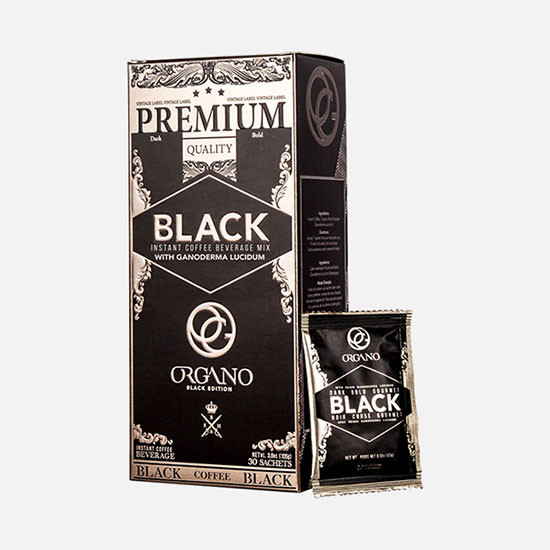
Choosing from Mushroom Coffee Boost
Mushroom Coffee Boost is most helpful when you choose by how you already drink coffee. If you prefer a straightforward black cup and want control over what you add, Gourmet Black Coffee is the cleanest place to start. You can prepare one serving, taste it on its own, then decide whether you want milk or sweetener.
If your normal order is creamier, Gourmet Cafe Latte offers a different experience, so take the time to read its ingredient details rather than assuming it will suit the same needs as a black coffee blend. If you are unsure which coffee format fits your taste, the Coffee Selection Variety Pack gives you a way to compare styles before choosing a repeat favorite.
The goal is not to make a health promise about a coffee. It is to give you a product path that is clear enough to make a comfortable decision. Choose a format you will enjoy, understand the ingredients, and let the cup earn a place in your routine instead of expecting it to fix everything else.
The bottom line
Mushroom coffee can be good for you when it helps you make a sensible change, such as using less caffeine, choosing a coffee routine you enjoy, or being more deliberate about what is in your cup. It is not proven to be a universal health upgrade, and it should not be treated like a medicine.
Read the label, know the caffeine source, identify the mushroom ingredients, and keep your expectations grounded. If the blend tastes good, fits your budget, and works with your individual health needs, it may be a worthwhile part of your morning. If not, regular coffee, decaf, tea, or another familiar drink can still be the better choice.
Frequently asked questions
Is mushroom coffee healthier than regular coffee?
Not automatically. A mushroom coffee may be a useful choice when it gives you less caffeine or a format you enjoy, but it is not proven to be broadly healthier than regular coffee. The formula, serving size, added ingredients, and your own health needs all matter.
What are the real benefits of mushroom coffee?
The clearest practical benefit is often lower caffeine when a blend uses less coffee than a standard cup. That may help some people reduce jitters or keep caffeine earlier in the day. The wider claims around focus, stress, immunity, or sleep are less certain because research on finished mushroom coffee blends is limited.
Does mushroom coffee work?
It can work as a coffee routine if you like the taste, the format, and the caffeine level. It should not be expected to treat a health condition or replace medical care. If you are buying it for a specific wellness claim, check whether the product gives clear ingredient and serving information and keep expectations realistic.
Who should be careful with mushroom coffee?
Anyone who is pregnant, breastfeeding, taking prescription medicine, managing a health condition, sensitive to caffeine, or allergic to mushrooms should ask a pharmacist or clinician before making a mushroom blend a regular habit. It is also sensible to stop using any product that causes an unwanted reaction.
Related posts
 Coffee
Mushroom Coffee Side Effects: What to Know
Mushroom coffee can still contain caffeine and other active ingredients. Learn what to check, who should be cautious, and how to try a blend thoughtfully.
 Coffee
How to Make Mushroom Coffee: 3 Easy Ways
Make mushroom coffee with an instant blend, brewable coffee, or a simple at-home mix. Learn which method fits your routine and how to make the cup taste right.
 Coffee
What Does Mushroom Coffee Taste Like? A Straight Answer
Mushroom coffee usually tastes more like coffee than mushrooms. Learn what changes the flavor, what to expect from each format, and how to choose your first cup.